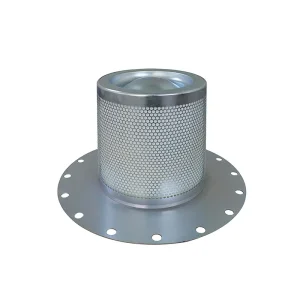
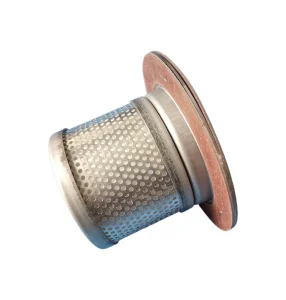
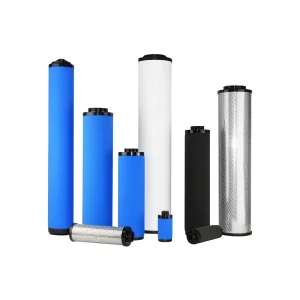
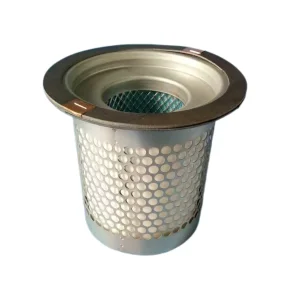
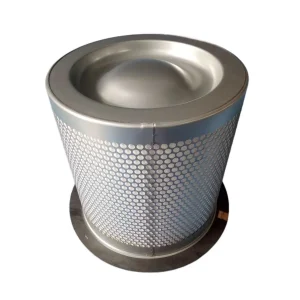
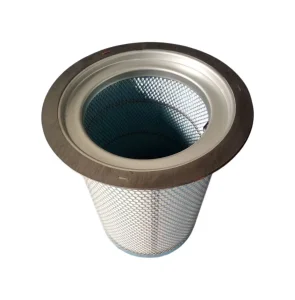
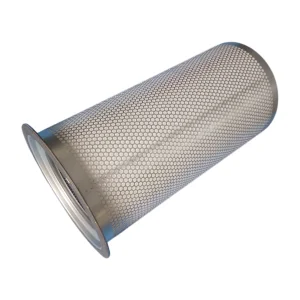
Explore our high-performance replacement products offering optimal oil removal efficiency, low differential pressures, and superior construction.
Understanding the micro-scale mechanics that dictate downstream industrial compressed air purity.
Inline air-oil separators are critical components in modern compressed air infrastructures. Unlike standard terminal filters, the inline air oil separator operates under dynamic dynamic pressure and temperature fluctuations, handling highly dispersed oil aerosols, liquid droplets, and sub-micron mist. Within lubricated screw or rotary vane compressors, oil serves to lubricate, seal, and absorb heat. However, downstream processes require virtually oil-free air (often conforming to ISO 8573-1 Class 1 or Class 2 standards) to prevent critical tool fouling, product contamination, and instrumentation failure.
The separation process leverages three primary physical mechanisms inside a structured matrix of borosilicate glass fibers:
Larger oil droplets (typically >1 micron) travel along the streamlines of the air flow. When these streamlines pass closer to a glass fiber than the radius of the droplet itself, the particle collides directly with the fiber and is captured. This mechanical capture is highly dependent on fiber density and spacing.
As the compressed air stream is forced to navigate the dense, tortuous path of the glass fiber matrix, the stream bends rapidly. Due to their momentum, larger oil droplets cannot adjust to rapid changes in flow direction, causing them to deviate from the streamline and impact the fiber surface directly.
For sub-micron aerosols (typically <0.1 microns), random thermal energy causes these tiny droplets to move in a zig-zag, oscillatory pattern. This erratic movement increases the probability that these micro-particles will make contact with the filter fibers, adhering to them through van der Waals forces.
Once captured, these micro-droplets undergo coalescence. They flow along the fiber intersections, combining into larger liquid droplets that migrate to the outer wet-side layer of the separator. Gravity then pulls the heavy oil down to the sump area of the housing, where it is evacuated via an automatic drain system. JCTECH filters maintain an optimal balance of permeability and structural rigidity to ensure that oil carryover remains below 3 ppm, protecting downstream operations from costly chemical degradation.
Addressing decarbonization, production safety, and the true cost of pressure drop.
Globally, industrial automation is experiencing a rapid transition toward energy-efficient, zero-emission pneumatic systems. The cost of running an industrial air compressor is highly sensitive to line pressure drop (DP). A seemingly minor pressure drop of 0.1 bar (1.45 psi) across an inefficient inline oil separator translates directly to a ~1% increase in the compressor's electric motor energy consumption.
For a continuous 100 kW compressor system, this equates to thousands of kilowatt-hours wasted annually. As nations enforce strict environmental regulations and corporate entities adopt carbon neutrality metrics, specifying premium OEM inline air oil separators becomes a financial and environmental imperative. Low-quality elements suffer from rapid fiber migration, premature clogging, and structural collapsing, causing operational halts and soaring energy consumption.
Furthermore, industries such as lithium-ion battery production, microelectronics, pharmaceutical packaging, and food processing mandate air quality indexes conforming to ISO 8573-1:2010 [1:4:1] or better. Any hydrocarbon breakthrough ruins sensitive chemical components and invalidates safety certifications. JCTECH addresses these problems with precision-engineered media matrices that minimize flow resistance while achieving high capture rates.
| Performance Metric | JCTECH OEM Grade | Standard Replacement |
|---|---|---|
| Initial Differential Pressure | < 0.15 bar (2.17 psi) | > 0.28 bar (4.06 psi) |
| Oil Carryover Rate | 1 - 3 mg/m³ (ppm) | 5 - 10 mg/m³ (ppm) |
| Nominal Filter Lifespan | 4,000 - 6,000 hours | 2,000 hours |
| Fiber Migration Resistance | High (Thermally bonded) | Low (Adhesive dependent) |
A deep dive into our advanced media chemistry, construction standards, and structural designs.
Our engineering roadmap focuses on molecular-level glass fiber structures, structural stability under high surge pressures, and long-term chemical compatibility with synthetic air compressor lubricants.
Utilizing high-purity glass microfibers imported from international suppliers. The sub-micron fibers feature a high void volume (up to 95%), which optimizes dirt-holding capacity while lowering flow resistance.
Our inner and outer support cores are fabricated from thick, electro-galvanized or stainless steel plates. The precision-perforated hole pattern ensures uniform air distribution without compromising structural integrity under differential pressure surges.
Designed with high-durability fluororubber (FKM) or custom NBR gaskets that maintain sealing capabilities under continuous operating temperatures up to 120°C. Fully integrated grounding tabs prevent hazardous static buildup.
Our separators are manufactured through a multi-stage thermal bonding process that avoids standard adhesives prone to breakdown by synthetic compressor lubricants. Additionally, the outer drainage layer utilizes high-temperature polyester fleece, ensuring coalesced oil drains into the collector without re-entraining in the clean air stream.
Ensuring compliance across diverse global markets and rigorous application standards.
Whether utilized in manufacturing hubs or marine environments, inline separation performance directly affects equipment lifespan. Key applications include:
JCTECH operations and products conform to rigorous engineering and quality management systems:
Shanghai Jiongcheng Industrial Co., Ltd.
JCTECH is a specialized filtration manufacturer with three distinct production factories. Our key facilities include our traditional filtration center in Xinxiang, Henan province, and our specialized lubricants division, supplying air compressor lubricants globally. We combine filtration engineering and lubrication chemistry to deliver optimized separation systems.
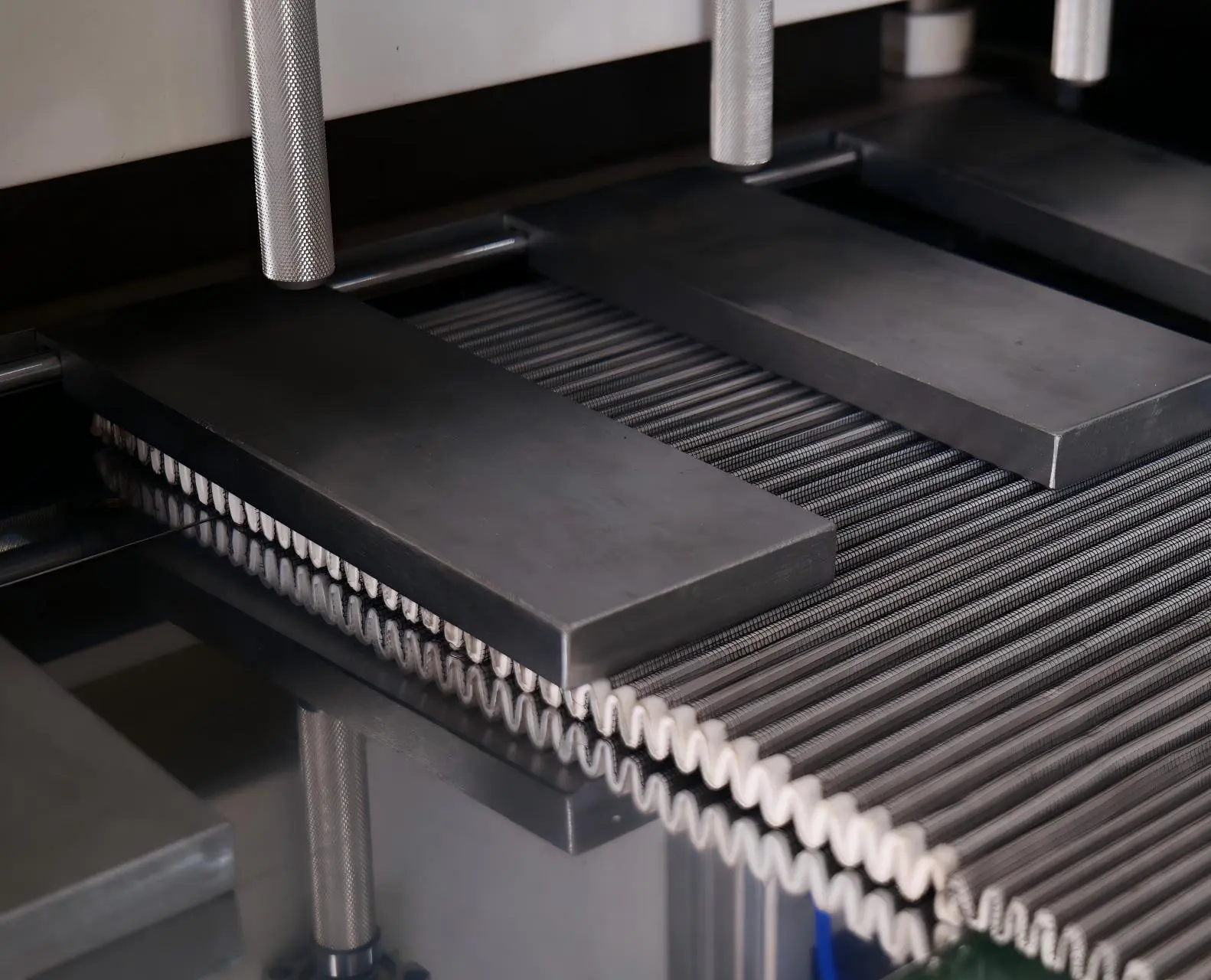
We select and design the optimal filter element configurations based on your specific onsite operating parameters. Factors such as localized atmospheric moisture, variable compressor oils, and extreme temperature cycling require customized engineering solutions. Our design objective is to extend maintenance intervals and reduce your compressed air operating costs.
We support all products with clear warranties and technical guarantees. Contact our application engineering desk to consult on specific sizing requirements.
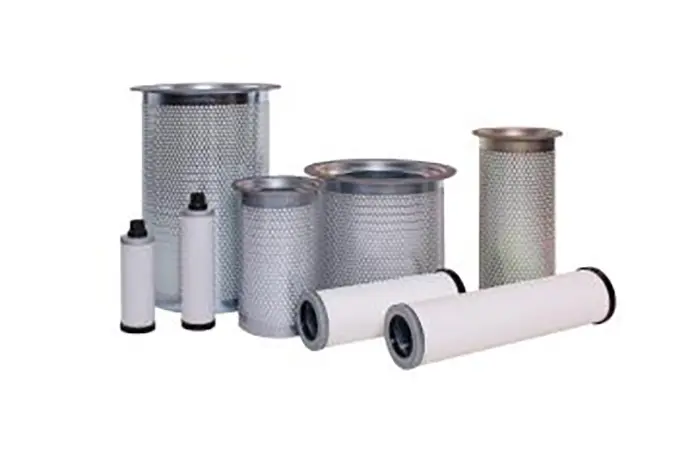
JCTECH manufactures high-performance replacements engineered to meet or exceed OEM specifications.














Comprehensive technical support, strict quality guarantees, and customer-focused service.

Our dedicated support team coordinates technical services to resolve field issues and maintain operation of your compressed air infrastructure.

We provide long-term application engineering, custom compatibility analysis, and regular equipment checks to prevent oil carryover.

All OEM replacement elements are backed by a manufacturing warranty. In case of issues, JCTECH will provide rapid troubleshooting and replacement services.

We analyze customer data and field feedback loops to continuously refine our glass fiber matrix designs, enhancing product durability.
Specifically matched dimensions, pressure capabilities, and flow profiles.
Answering high-level technical and operational questions on compressor system filtration.
Keep up with JCTECH's latest research, product releases, and technical documentation.
JCTECH has launched the 24900342 external replacement separator element. Designed for industrial compressors, it improves oil coalescence under high pressure drop conditions, supporting energy-saving upgrades.
Read More →This technical article explains the functions of air, oil, and separator filters. Learn how these components work together in rotary screw systems to maintain air quality and protect downstream equipment.
Read More →A detailed review of oil and hydrocarbon separation from industrial process water. This analysis covers environmental regulations, separation physics, and practical solutions for field operations.
Read More →Our technical team can assist you with sizing, custom oil compatibility, cross-referencing OEM part numbers, and volume pricing requests.


Broad range compatibility across various compressor brands and systems.
 Jiong Cheng