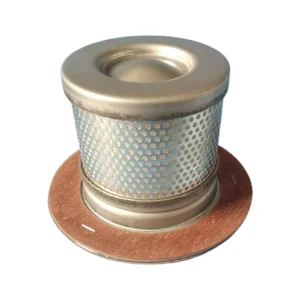
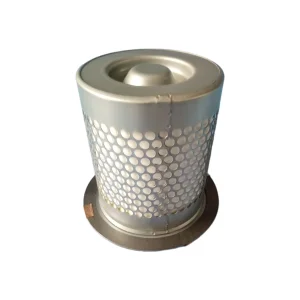
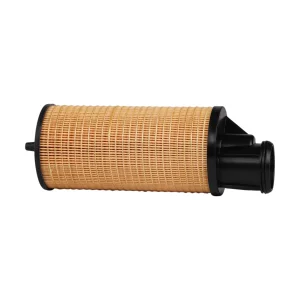
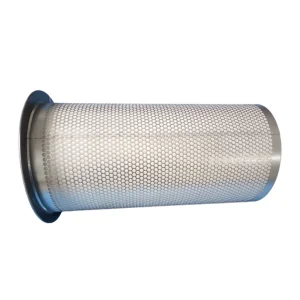
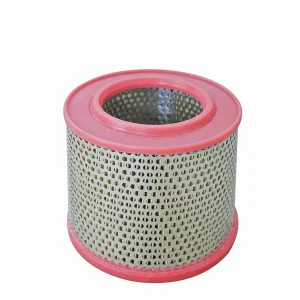
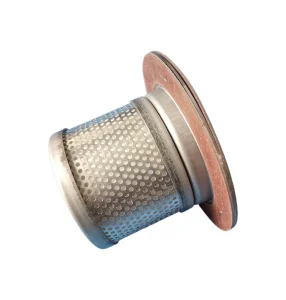
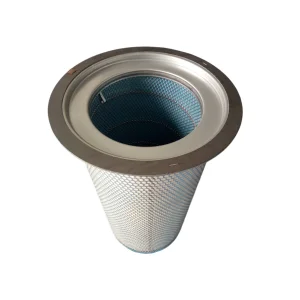
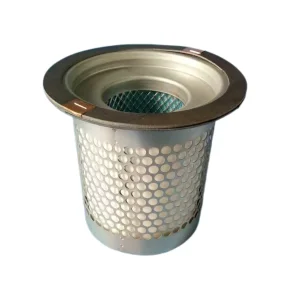
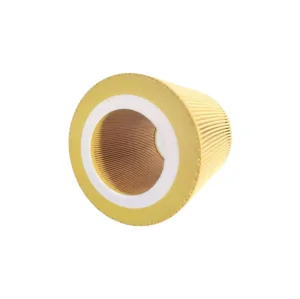
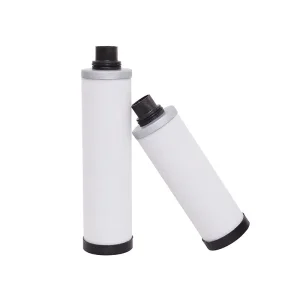
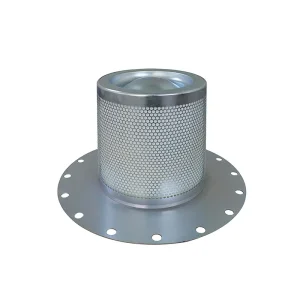
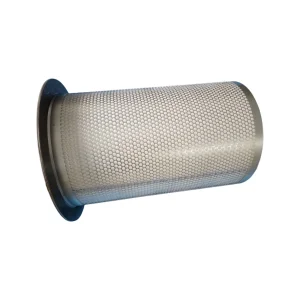
Factory-direct structural replacements engineered for high durability, structural integrity, and prolonged service lifetimes.
Intake air filtration represents the primary defense mechanism of any industrial rotary screw or centrifugal compressor. The quality of ambient intake air directly influences the lifecycle of high-value downstream components, notably the compressor lubricant, oil filter, and the air-oil separator elements. To properly evaluate the *China air filter change interval*, it is imperative to analyze the mechanics of particle filtration through media pathways.
In standard industrial operations, atmospheric air contains a suspension of fine contaminants, typically ranging from sub-micron aerosols to large particulate matter ($>100\,\mu\text{m}$). These particles are captured by the filtration media via three core physical principles:
“Sourcing high-performance filtration media that maintains high structural rigidity under intense suction is paramount. The air filter change interval is directly tied to the media's capacity to store dust without collapsing, which causes sudden bypass of contaminant particles.”
As particulate load accumulates within the filter media, flow channels contract, leading to a progressive rise in differential pressure ($\Delta P$) across the element. In compressor mechanics, a higher suction resistance forces the compressor air-end to work harder to intake the equivalent mass flow of air. Under standard engineering formulas, every 100 mbar increase in intake restriction (pressure drop) translates to an approximate **1% increase in specific energy consumption** at the compressor motor.
For a continuous-running 250 kW compressor system, an unmanaged, excessively long air filter change interval could easily generate an additional 150 to 200 mbar of unnecessary pressure drop, incurring thousands of dollars in wasted electrical energy annually. Thus, the optimal air filter change interval is not merely a question of structural survival, but an equation balancing maintenance labor costs, filter procurement expenses, and power consumption penalties.
The operational environment is the primary determinant of the air filter lifecycle. The table below represents empirical data collected across more than 2,000 global installations, providing a clear guideline for procurement officers on typical change intervals based on site dust density.
| Environmental Class | Typical Applications | Dust Load (mg/m³) | Avg. Change Interval (Hrs) | Optimal ΔP Threshold (mbar) |
|---|---|---|---|---|
| Class I (Controlled) | Pharmaceutical, Semiconductor Cleanrooms | < 0.05 | 3,000 - 4,000 | 35 - 45 |
| Class II (Standard) | General Machine Assembly, Electronics | 0.05 - 0.5 | 2,000 - 3,000 | 45 - 55 |
| Class III (Heavy Industrial) | Cement Plants, Glass Manufacturing, Mining | 0.5 - 5.0 | 1,000 - 1,500 | 55 - 65 |
| Class IV (Extreme Load) | Steel Mills, Foundry Operations, Tunneling | > 5.0 | 500 - 1,000 | 65 - 80 |
Known globally under the brand JCTECH, we operate three advanced manufacturing facilities specializing in premium air compressor components and specialized lubricating oil systems.
Our strategic hub in Xinxiang, Henan Province, produces next-generation filtration media designed for compatibility with global compressor lines. By leveraging integrated manufacturing and direct sourcing of raw materials, we enable international distributors, service providers, and OEMs to bypass costly middle-tier markups while securing high-performance parts matching original OEM specifications.
The landscape of air filter manufacturing has undergone a massive paradigm shift. Historically, Chinese factories were perceived as volume-driven suppliers. Today, companies like JCTECH combine deep manufacturing vertical integration with rigorous engineering testing arrays, utilizing top-tier raw materials to build replacement elements that often outperform local market OEMs.
At JCTECH, we understand that a filter is only as competent as its media. We build our air filter cartridges utilizing premium-grade, thermally stable cellulose and synthetic composite media from world-renowned suppliers, including Ahlstrom (Finland) and Hollingsworth & Vose (USA). These materials provide structured pore sizes, high air permeability, and extreme mechanical strength. This results in stable filtration efficiency (exceeding 99.98% for particles $>2\,\mu\text{m}$) and significantly delays the necessary air filter change interval in demanding scenarios.
Manual pleating processes lead to uneven distribution, which promotes localized high-velocity air tunnels and premature clogging. Our factory employs computerized, hot-melt embossing and pleating machinery. This guarantees exact pleat geometry, maintaining consistent spacing even under severe pull pressures. Stabilized pleats eliminate media flutter, a primary cause of micro-tearing in standard filter elements.
By-pass is the hidden enemy of compressor life. If air bypasses the filter cartridge via poor seal fittings, particulate matter directly enters the compression chamber. We utilize high-density polyurethane (PU) or chemically treated rubber compound gaskets that are custom-molded to fit exact compressor intake profiles. Additionally, our metal components are coated with anti-corrosion galvanized layers to prevent rust formation under humid operating environments.
“Sourcing from China-based factories allows global procurement teams to optimize cost structures without sacrificing quality. The key is seeking suppliers who openly document their raw material sources, testing protocols, and laboratory parameters.”
An intake air filter is not an isolated component. It functions in tandem with the compressor lubricant and the air-oil separator element. If the air filter fails to extract fine atmospheric dust, these particles migrate directly into the cooling oil. The dust acts as a catalyst for oil oxidation, forming carbon deposits and sludge. This contaminated oil then clogs the fine glass fibers of the air-oil separator, driving up the separator's differential pressure and severely cutting its service life short. Thus, a controlled air filter change interval is the single most cost-effective way to preserve the lifecycle of the more expensive air-oil separator.
We tailor high-efficiency media configurations depending on the local air quality index and specific ambient humidity profiles of your plant.
Our engineering support services help customers diagnose the root causes of premature filter clogging or oil degradation. Through differential pressure analytics and material inspections, we can adjust the thickness and material blend of the filter media (e.g., incorporating nano-fiber coatings for high-humidity steel mills or heavy-dust cement plants) to maximize your equipment uptime. Our goal is to reduce your total air compressor maintenance costs and protect your machinery investment.
Compatible Major Global Brands:









Exceptional post-sale service ensuring long-term equipment compatibility.

Dedicated field engineers to resolve custom plant issues quickly.

Guaranteed structural protection and fast turnaround services.

Continuous material improvement based on real-world industrial feedback.
Read technical answers regarding standard maintenance procedures and air filter optimization strategies.
Insights from JCTECH's research laboratories, documenting the development of high-performance materials and separation systems.
Recently, JCTECH achieved a major breakthrough in oil-air separation technology with the launch of our 24900342 external replacement element, designed for low residual oil carryover...
Read White Paper →In high-demand industrial systems, the intake filter acts as the primary defense line, protecting the expensive air-end rotor configuration from wear and particle scratching...
Read White Paper →A detailed analysis of how oil separators extract vaporized lubricating aerosols from compressed air streams, maintaining quality downstream air...
Read White Paper →Consult JCTECH's field engineers to configure your air filtration solutions and request pricing lists.


High-volume configurations built for heavy industrial environments, showing exceptional structural durability.
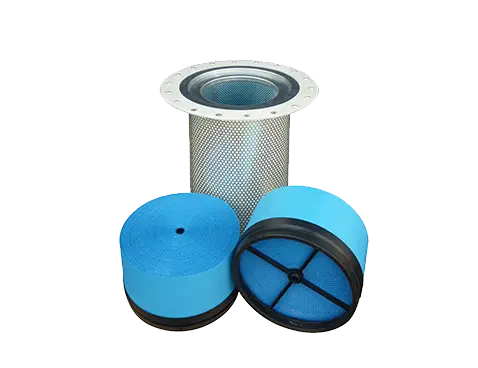
Industrial Glassfiber Separator
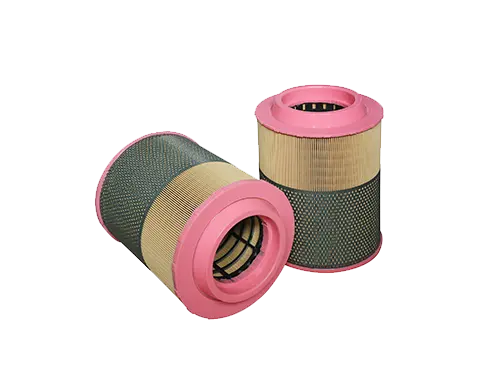
High Pressure Synthetic Separator
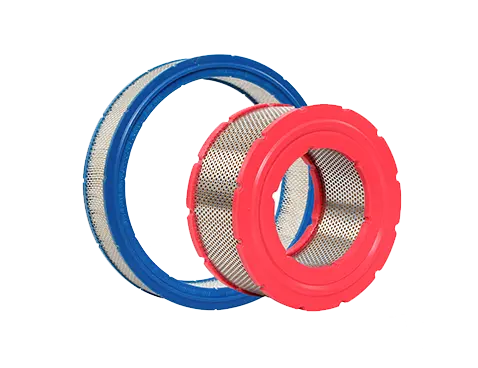
Extreme Temperature Element
Our secondary selection of premium parts, including high-capacity separators and mufflers for screw compressors.
 Jiong Cheng