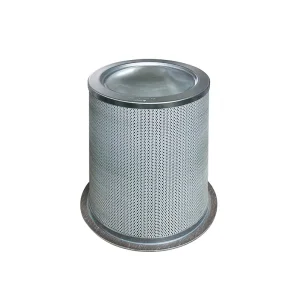
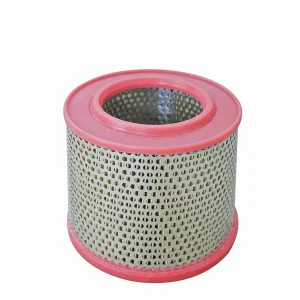
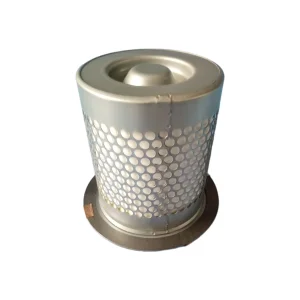
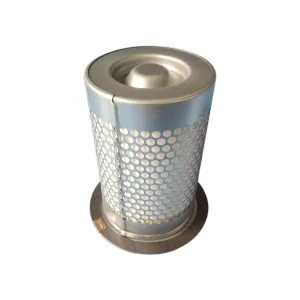
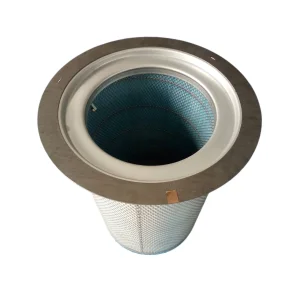
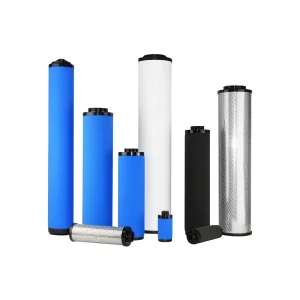
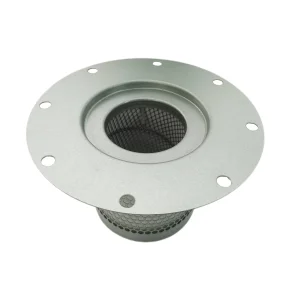
In the current industrial landscape, the paradigm shift towards "Industry 4.0" has transformed how we perceive filtration. No longer just a commodity, the inline filter has become a critical node in the IoT-enabled predictive maintenance ecosystem. As a leading OEM manufacturer and supplier, our focus has expanded beyond simple filtration to providing information gain—translating raw operational data into actionable longevity for your compressed air systems.
The myth of "cheap production" has been eclipsed by the reality of "intelligent manufacturing." Modern Chinese industrial facilities, such as our own, have integrated automated manufacturing processes, real-time quality control telemetry, and advanced material sourcing strategies. This enables a level of supply chain resilience that global enterprises rely on. By optimizing glass fiber density and adopting aerospace-grade adhesive bonding, we provide OEM-standard replacements that perform at or above original equipment specifications.
Global enterprises are moving away from reactive purchasing to a Total Cost of Ownership (TCO) model. Procurement officers are now optimizing for:
We see diverse application requirements across global markets:
Requires ultra-high purity filtration; zero-contamination air is non-negotiable for product safety.
High-duty cycle environments where heat and particulate saturation are constant threats.
Demands robust, fail-safe filtration to prevent catastrophic downstream turbine or component failure.
Of deep-industry experience and R&D.
Compliance with global manufacturing protocols.
Supplying to over 50+ countries worldwide.
Manufacturing facility dedicated to innovation.
A: Modern filtration is not just about the physical filter; it is about the reliability data behind it. We provide testing documentation and material specifications that reduce the risk for procurement teams, moving them from "blind buying" to "verified purchasing."
A: Our filtration elements are engineered to meet or exceed ISO 8573 standards. By utilizing high-surface-area borosilicate glass fibers, our products achieve particle capture rates (99.8%+) comparable to, and often more cost-effective than, proprietary OEM parts.
A: Through digital twin production planning and automated inventory management, we have reduced lead times by 30% compared to traditional manufacturing, ensuring our global supply chain remains resilient despite global market fluctuations.
 Jiong Cheng