Why Is Air Filter Oil Important?
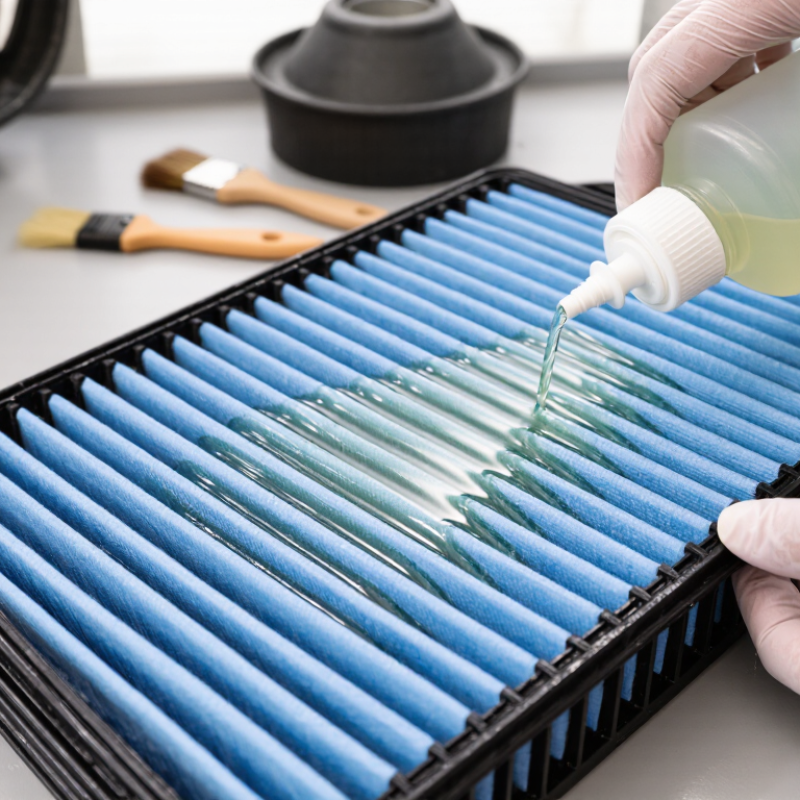
Air Filter Oil helps a reusable filter capture fine dust that dry filter media may miss. The oil creates a light, tacky coating across the filter’s fibers. As air passes through, dirt clings to that surface instead of traveling toward the engine. The result depends on even coverage, not a glossy, soaked filter.
Air-filtration specialist Alex Morgan offers this illustrative reminder: “A thin, even film catches dust; excess oil can create new problems.” This is an original editorial line, not a verified quotation from a published expert. The practical point is still important. Follow the filter maker’s instructions, apply oil sparingly, and give it time to spread through the pleats. Check the filter in good light. Pale, dry patches may need attention; oil pooling at the edges suggests too much.
Small details matter. A clean workbench helps keep grit away from freshly washed media. So does patience. Over-oiling can restrict airflow or allow oil to migrate onto nearby components, depending on the filter design. Under-oiling may reduce filtration performance. Neither outcome is ideal.
Air Filter Oil is not a universal upgrade for every filter. Some filters are designed to run dry, and adding oil can damage them. Check the product label before servicing. Even careful maintenance is not perfect; conditions vary, and visual inspection has limits. A manufacturer’s guidance is the safer reference.
Why Is Air Filter Oil Important?
In an oiled-gauze air filter, oil gives the cotton fibers their dust-catching surface. Air passes through the layered gauze, while sticky oil helps hold particles that might otherwise slip between the fibers. It is not a solid barrier. Think of fine dust meeting a lightly tacky screen. The U.S. EPA classifies PM10 as particles 10 micrometers or smaller, and PM2.5 as particles 2.5 micrometers or smaller. These sizes show why filtration depends on more than visible debris. A filter can look clean and still hold fine dust. That part is easy to miss. SAE J726 provides a standardized method for evaluating engine air cleaners, including dust capacity and airflow restriction; results depend on the filter design and test conditions.
Tips: Apply oil evenly after cleaning, then allow it to spread through the gauze. Follow the filter maker’s service instructions, and avoid pooling. Too much oil may reduce airflow or migrate downstream; too little can leave dry areas that capture dust less effectively. Check the pleats in good light. Patchy color can be a clue, though not a precise measurement. Real use varies with road dust, humidity, and maintenance, so inspection matters as much as a fixed service interval.
Particle-size reference limits show how small airborne particles can be. Oil adds a tacky surface to gauze fibers, helping intercepted dust stay on the filter instead of passing through.
The bars show particle-size limits, not air-filter efficiency. PM2.5 refers to particles 2.5 micrometers or smaller; PM10 refers to particles 10 micrometers or smaller. Source: U.S. Environmental Protection Agency.
Air filter oil helps a reusable cotton filter catch fine dust that dry fibers might miss. The oil forms a tacky film across the filter material, holding particles as air passes through. Think of dust meeting a lightly sticky screen, not a solid wall. Air can still flow, while trapped dirt stays in the pleats.
A claimed 99% efficiency needs context. Results depend on particle size, airflow, test method, and whether the filter is clean and correctly oiled. It is not a guarantee that every filter removes 99% of every particle in everyday driving. Small details matter. Too little oil may leave fibers less effective at trapping fine dust. Too much can migrate downstream in some intake systems. That possibility is easy to overlook. Apply oil evenly, let it spread as directed, and inspect the pleats under good light. They should look uniformly coated, not wet or pooled. I would not judge coverage by color alone; lighting can make thin spots hard to see. Follow the filter maker’s service instructions, and replace a damaged element rather than trying to compensate with extra oil.
Air filter oil helps a reusable filter capture fine particles within its media. Too little oil can leave parts of the material less effective. Too much can raise airflow restriction or allow oil to move downstream. The balance matters.
ISO 5011 evaluates an intake air cleaner under controlled test conditions. A test rig pulls air and specified dust through the assembled filter. Technicians measure airflow restriction, then add dust in stages to assess how restriction changes as the filter loads. Dust capacity records how much test dust the assembly holds before reaching a defined restriction limit. Efficiency reflects how much dust the filter captures rather than passing through. Small details matter.
Oil affects these results because it changes how particles adhere to the media. A well-oiled filter may capture more fine dust, but added capture can come with increased resistance to airflow. During testing, consistent oil application helps make comparisons meaningful. In service, uneven coating or excess oil can make performance less predictable. A laboratory result is useful, not perfect; real dust, humidity, and installation vary. Check the filter maker’s application guidance, and avoid judging performance by appearance alone.
Air filter oil helps capture fine dust that dry filter media may not hold as effectively. It must be applied evenly and sparingly. Too much oil can coat the filter’s pores, making it harder for air to pass through. The result may be higher intake restriction, reduced airflow, and less responsive engine performance. Small changes matter. More is not better.
Excess oil can migrate from the filter toward nearby intake components. On vehicles with sensitive airflow sensors, residue on the sensing element may interfere with accurate readings. Symptoms vary, so a dirty sensor should not be assumed to explain every drivability problem. Check the filter and sensor using the vehicle’s service guidance. After oiling, let the filter sit for the specified time, then inspect it under good light. The media should look evenly treated, not wet or dripping. It is easy to misjudge a pale patch and add another coat. That can create more trouble than it solves. A little unevenness may be less harmful than excess oil. Avoid touching delicate sensor elements during inspection.
For an oiled cotton-gauze air filter, the oil helps trap fine dust before it reaches the engine. Too little oil can leave parts of the filter less effective; too much may restrict airflow. Balance matters.
A re-oiling interval of about 50,000 miles is often cited for normal driving conditions. Treat it as a guide, not a promise: dusty roads, construction zones, and frequent off-road use can load a filter much sooner. Check the filter during routine service, especially after driving in visible dust. Look for heavy dirt, uneven coloring, or areas that seem dry. A quick glance cannot reveal everything, though.
Clean and re-oil the filter only as its care instructions specify. Apply oil evenly and sparingly, then allow it to spread through the media before reinstalling. Rushing this step can leave dry patches or excess oil. I’ve found that the mileage estimate is easy to remember, but the driving conditions are easier to underestimate.
| Driving or Filter Condition | What to Check | Recommended Action | Why It Matters |
|---|---|---|---|
| Normal driving on paved roads | Inspect the reusable filter at routine service intervals for visible dirt, damage, or uneven oil coverage. | For some washable, oil-treated filters, re-oiling may be due at approximately 50,000 miles. Follow the filter maker’s service instructions; this is not a universal interval. | Correct oiling helps the filter capture fine particles while allowing air to pass through. |
| Dusty roads, construction areas, or frequent off-road driving | Check more often for a loaded filter, especially after prolonged exposure to dust. | Clean and re-oil when inspection or the filter’s service instructions indicate it is needed. Do not wait for a mileage interval if the filter is heavily soiled. | Dust can build up faster in severe conditions and restrict airflow. |
| Wet, muddy, or unusually dirty conditions | Look for mud, moisture, or debris that may obstruct the filter media. | Service the filter according to its cleaning instructions, and let it dry fully before applying oil. | Moisture and debris can affect airflow and filtration performance. |
| After cleaning a washable, oil-treated filter | Confirm the filter is completely dry and that the media is intact. | Apply only the specified filter oil, following the product instructions. Allow it to distribute evenly before reinstalling. | Oil helps trap particles in the filter media; too little or uneven coverage may reduce dust capture. |
| Filter appears excessively wet with oil | Check for pooled oil or oil that could migrate from the filter. | Use the filter maker’s guidance to correct excess oil before installation. | Over-oiling can allow oil to reach and contaminate sensitive intake components, including some airflow sensors. |
| Important: Re-oiling applies only to reusable filters designed to be oil-treated. Disposable paper filters should not be washed or oiled. Vehicle use, filter design, and driving conditions can change the correct service interval. | |||
It measures dust-capture efficiency, dust capacity, and airflow restriction under controlled conditions. Technicians add specified dust in stages. Small details matter.
It records how much test dust an assembled filter holds before reaching a defined restriction limit. It is not simply a visual cleanliness rating.
Oil helps fine particles adhere to reusable filter media. Dry media may hold some fine dust less effectively. The coating should be even.
Yes. Excess oil may coat the media’s pores and increase airflow restriction. More is not better.
Oil can migrate downstream and leave residue on a sensitive sensing element. That residue may interfere with readings. Symptoms vary.
Follow the filter’s application guidance and specified waiting time. Under good light, the media should look evenly treated, not wet or dripping. I might still misread a pale patch.
No. Dust, humidity, and installation can vary from controlled test conditions. Useful, not perfect.
No. Check the filter and sensor using the vehicle’s service guidance. Avoid touching delicate sensor elements during inspection. It could be something else.
Air Filter Oil helps oiled-gauze filter media capture fine dust while allowing air to pass through. The oil coats the gauze fibers, helping particles adhere rather than travel into the engine. Some filters claim efficiency of up to 99%, but performance depends on the filter design and test conditions. The ISO 5011 procedure provides a standardized way to assess filtration efficiency, dust-holding capacity, and airflow restriction, giving a more complete picture than efficiency alone.
Applying too much oil can clog the media, increase airflow restriction, and potentially contaminate nearby sensors. Follow the filter maker’s care instructions and apply oil evenly after cleaning. For normal driving conditions, some maintenance guidance recommends re-oiling at around 50,000 miles, though dusty environments or frequent severe use may call for more frequent inspection. Proper servicing helps balance dust protection with adequate airflow.

Jiong Cheng