How to Choose Air Compressor Filters?

Time:2026-10-18 Author:Oliver
0%

Choosing the right Air Compressor Filters is not a minor maintenance decision. It affects air quality, equipment life, energy use, and production reliability. A filter may look simple, yet its performance depends on particle size, oil aerosol, moisture, airflow, and pressure drop. The wrong choice can leave paint defects, blocked valves, or premature tool failure.

Ron Marshall, a respected compressed-air auditor, offers a useful principle: “Filtration is about controlling contamination, not simply adding filters.” That idea matters on a busy workshop floor. A filter installed beside a compressor may collect water and oil quickly. A downstream filter may protect sensitive instruments more effectively. Location changes the result.

Start with the required air-quality class. ISO 8573-1 can help define acceptable particles, water, and oil levels. Then check the compressor’s flow rate, connection size, temperature, and operating pressure. Do not select a filter by pipe diameter alone. The element must support the real airflow without creating excessive pressure loss. Small details matter.

Consider the drain system, replacement interval, and access for inspection. Automatic drains can fail. Manual checks still have value. A differential-pressure indicator can reveal a loaded element before production suffers. Still, no filter solves every problem. Poor piping, excessive heat, or an undersized dryer may undermine good filtration.

I have seen clean-looking elements replaced too late. That is an easy mistake. Manufacturer data should guide the final decision, but field conditions deserve equal attention. This guide explains how to compare Air Compressor Filters with practical judgment, measurable criteria, and a willingness to question convenient assumptions.
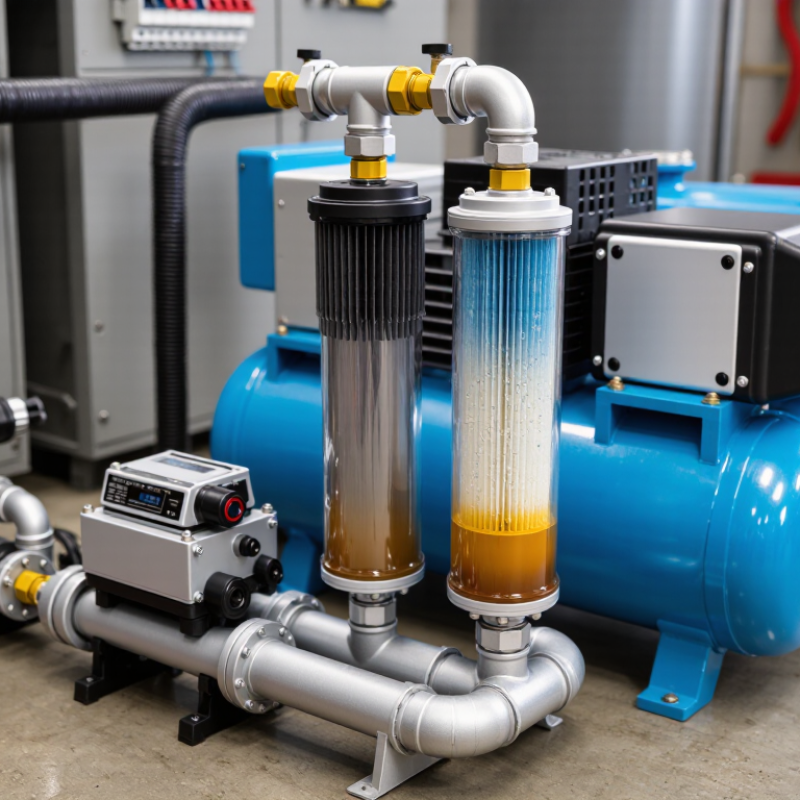
How to Choose Air Compressor Filters?

What Air Compressor Filters Do and Why They Matter

Compressed air may look clean, but it can carry dust, condensed water, oil aerosols, and pipe scale.

These contaminants can damage valves, clog nozzles, and spoil painted or packaged products. An air compressor filter removes specific pollutants before they reach equipment. Its value depends on the filter’s purpose, not its appearance.

Choosing the right filter starts with the application. A particulate filter captures solid debris, while a coalescing filter separates liquid water and oil mist. Activated carbon filtration can reduce oil vapor and odors when extremely clean air is required.

Check the required air quality against ISO 8573-1, then match the filter with the compressor’s flow rate and working pressure. An undersized filter may create a sharp pressure drop. That wastes energy and weakens tools.

Small details matter. Look for a visible pressure indicator, a suitable drain, and an element rated for the actual airflow. Inspect the housing for cracks or loose seals. A clean-looking filter is not always a healthy one.

In maintenance work, I have seen operators delay replacement because the pressure still seemed acceptable. The element was already holding moisture inside. That mistake is easy to repeat.

Record pressure drop readings and replacement dates, but question the schedule when operating conditions change. High humidity, heavy dust, and continuous use can shorten filter life.

A filter installed backward can also fail quietly. Check the airflow arrow before starting the compressor.

How to Identify the Contaminants Your System Must Remove

How to Choose Air Compressor Filters?

How to Identify the Contaminants Your System Must Remove

Filter selection should begin with evidence, not habit. Compressed air can carry dust, rust, liquid water, oil aerosols, oil vapor, and microbial contamination. Each contaminant requires a different removal method. A particulate filter cannot reliably remove oil vapor. A coalescing filter cannot solve every moisture problem.

Inspect the compressor room and distribution lines carefully. Look for rusty pipe sections, drain failures, unusual odors, and oily residue near air outlets. Check the air receiver, automatic drains, and filter housings. Record pressure, temperature, flow demand, and filter differential pressure during normal operation. Small details matter. A clean outlet can hide contamination upstream.

Laboratory testing provides stronger evidence than visual inspection. Collect samples at the compressor outlet and each critical point of use. Test for particles, water, total oil, and other process-specific contaminants. ISO 8573-1 can help define air quality classes for these measurements. Food, pharmaceutical, electronics, and painting operations may need tighter limits.

I once treated wet air as a simple drain problem. That assumption caused repeated downstream moisture. The real issue involved inadequate cooling and a saturated separator. It was a useful mistake, but an avoidable one. Recheck results after installation, because contaminant levels change with seasons, maintenance, and production loads. A filter that looks suitable on paper may create excessive pressure loss in service.

How to Choose Air Compressor Filters?

Identify the contaminant type and its typical size before selecting filtration. Larger particles are usually handled by particulate filters, while oil aerosols and water droplets require coalescing filtration. Oil vapors require activated-carbon adsorption.

Typical size ranges shown are engineering reference values; actual contaminant levels depend on compressor design, intake-air quality, piping corrosion, ambient humidity, and maintenance conditions. Filter selection should also consider required air purity, pressure drop, flow rate, and ISO 8573-1 requirements.

Which Filter Types Match Different Air Quality Requirements

How to Choose Air Compressor Filters: Which Filter Types Match Different Air Quality Requirements

Air quality requirements should determine the filter train, not compressor size alone. ISO 8573-1:2010 classifies compressed air by particles, water, and oil. A dry workshop may need a particulate pre-filter for dust and pipe scale. A coalescing filter removes liquid water and oil aerosols. Its fine fibers create pressure loss, so filtration should match the measured risk.

Oil-free contact processes need stricter control. Activated carbon filters reduce oil vapors and odors, while sterile filters support air used near food, pharmaceuticals, or sensitive laboratory equipment. The U.S. Department of Energy’s Improving Compressed Air System Performance guide notes that leaks can waste 20–30% of compressor output. A clogged filter can create similar operating pain through higher pressure demand. Check differential pressure regularly. Small gauges matter.

There is no universal “best” filter. Medical-grade air, paint spraying, and pneumatic tools require different ISO classes. I have seen systems over-filter ordinary tools, increasing energy use without improving production. That choice deserves review. Install separators and drains upstream when liquid water is common. Use validated testing after installation, because a new filter does not prove the final air quality. Regular sampling is essential, and maintenance records should show pressure drop, drain operation, and replacement dates.

How to Select the Right Filter Grade, Size, and Capacity

How to Choose Air Compressor Filters?

Filter selection starts with the required air quality, not the pipe size. ISO 8573-1:2010 classifies compressed air by particles, water, and oil. Check the machine manual, process risk, and downstream equipment before choosing a grade. A general workshop may need a particulate filter and a coalescing filter. Instrument air often demands tighter oil and moisture control. Activated-carbon filtration is used only when vapor removal is genuinely required. Over-filtration wastes pressure and money.

Size the filter by actual flow, inlet pressure, and temperature. Do not match it by connection diameter alone. A filter rated for 1,000 m³/h may perform poorly at higher temperature or pressure. Field assessments often find undersized elements installed beside correctly sized pipes. The result is rising pressure drop, shorter service life, and unstable tools. Leave practical capacity margin, but avoid excessive oversizing without evidence. It can hide maintenance problems.

The U.S. Department of Energy’s Improving Compressed Air System Performance guide estimates that leaks can waste 20–30% of compressor output. A clogged filter can create similar operating pressure losses.

Install differential-pressure monitoring where possible, and record readings under peak demand. Replace elements according to pressure drop, not habit alone. That advice is less convenient. It is usually more accurate.

Check the manufacturer’s test conditions, because flow ratings are not always comparable. Filter choice should be reviewed after seasonal temperature changes, production expansion, or a new pneumatic process.

How to Install, Monitor, and Replace Air Compressor Filters

Choosing the right air compressor filter starts with the air quality your equipment requires. Check the filter’s pressure rating, flow capacity, and particle removal level. A fine filter may protect precision tools, but it can also create more pressure loss. Do not select by micron rating alone. Match the filter to the compressor’s output and the receiver’s working pressure.

Installation should begin with shutdown and complete pressure release. Lock out the power source before opening the housing. Confirm the airflow arrow points toward the equipment. Inspect the bowl, drain, and sealing ring for damage. A small twist in the seal can cause a slow leak. I once missed this during a routine change, and the compressor cycled far more often than expected. That mistake was avoidable.

Monitor the filter during normal production. Read the differential pressure indicator, inspect collected moisture, and listen for unusual airflow noise. Record readings weekly, especially in dusty or humid rooms. Replace the element when pressure drop reaches the service limit, when contamination is visible, or when airflow weakens. A calendar reminder helps, but it should not replace inspection. Some filters last longer than expected; others load quickly. After replacement, check for leaks and confirm stable outlet pressure. If the reading improves only slightly, the filter may not be the real restriction.

How to Choose Air Compressor Filters? - How to Install, Monitor, and Replace Air Compressor Filters

Filter Type / Stage Main Purpose Typical Filtration Range Recommended Location Key Selection Considerations
Water Separator Removes bulk liquid water and larger condensed droplets. Usually removes liquid droplets and particles larger than approximately 5–10 µm. Immediately after the compressor aftercooler or refrigerated dryer. Choose a model with a flow capacity above the compressor output and an automatic or correctly sized manual drain.
Particulate Filter Captures dust, rust, pipe scale, and solid particles. Common ratings include 1–5 µm, depending on the element. Upstream of sensitive equipment and before a coalescing filter. Confirm the required particle rating, maximum pressure, operating temperature, and flow capacity.
Coalescing Filter Removes fine oil aerosols, water aerosols, and small solid particles. Fine grades commonly range from about 0.01 to 0.1 µm; actual efficiency depends on the element design. Downstream of a water separator or particulate pre-filter. Use a pre-filter when necessary to protect the fine element from premature clogging. Verify oil carryover data at the actual operating flow.
Activated Carbon Filter Adsorbs oil vapors and certain hydrocarbon odors. Designed for vapor and odor removal rather than a specific particle size. After particulate and coalescing filtration. It does not remove bulk liquid oil or water effectively. Install upstream filtration and monitor service life carefully.
Sterile or High-Purity Filter Controls microorganisms and very fine contamination in critical applications. The required rating varies by application and validation method. As close as practical to the point of use. Select only when required by the process. Follow validated cleaning, sterilization, replacement, and integrity-testing procedures.
Point-of-Use Filter Provides final protection for a particular tool, machine, or process. Choose the particle, aerosol, or vapor rating required by the end use. Directly before the equipment or air-consuming process. Size for peak demand, not average demand, and check whether the filter causes unacceptable pressure loss.
Selection, Installation, or Maintenance Item Practical Requirement Typical Target or Interval How to Check Action if the Result Is Unsatisfactory
Flow Capacity The filter must handle the maximum required air flow at the operating pressure. Use the manufacturer’s rated flow at the actual pressure and temperature; avoid relying only on nominal pipe size. Compare peak demand and compressor delivery with the filter performance data. Select a larger filter or reduce the pressure drop through a correctly designed parallel arrangement.
Pressure and Temperature Rating The housing, bowl, seals, and element must withstand system conditions. The rated maximum must exceed the highest normal and foreseeable operating pressure and temperature. Review the nameplate, technical documentation, and site measurements. Do not operate the filter outside its rating; select a compliant replacement.
Installation Direction Air must travel through the element in the direction indicated by the housing arrow. Correct orientation is required at every installation. Inspect the arrow, inlet, outlet, drain position, and element seating. Depressurize and reinstall correctly. Replace damaged seals or elements.
Drainage Condensed liquid must be removed so it cannot flood the element or enter the air line. Check drains during routine inspections; frequency depends on humidity and load. Confirm that the drain discharges and that no liquid remains in the bowl. Clean, repair, or replace the drain. Never bypass a required drain.
Differential Pressure Shows how much pressure is lost across the filter and indicates loading. A clean filter should have low pressure loss; replace according to the differential-pressure limit specified for the element. Read the differential-pressure indicator or compare calibrated pressure gauges upstream and downstream. Investigate excessive pressure loss, verify flow demand, and replace the element when the specified limit is reached.
Visual Inspection Detects cracks, corrosion, leaks, damaged bowls, and saturated elements. Inspect during routine equipment rounds and after abnormal pressure or temperature events. Check the housing, bowl, clamps, seals, drain, fittings, and indicator. Isolate and depressurize the filter before repair or replacement; remove any unsafe component from service.
Element Replacement Restores filtration performance and reduces energy loss caused by a blocked element. Replace at the specified differential pressure, when damaged, or at the documented service interval—whichever occurs first. Use operating records, differential-pressure readings, and inspection results. Install the correct element, renew seals if required, reassemble, leak-test, and record the date and reading.
Post-Maintenance Verification Confirms safe operation and required air quality after installation or replacement. Complete before returning the system to normal production. Check for leaks, correct flow direction, drain operation, pressure drop, and air-quality requirements. Stop the system and correct the installation if any test fails.

Note: Filtration performance, pressure-drop limits, service intervals, and air-quality requirements vary by filter design and application. Always verify the technical data for the selected filter and follow applicable safety procedures.

FAQS

How should I choose an air compressor filter grade?

Start with the required air quality, not the pipe diameter. Check particle, water, and oil requirements. A general workshop may need particulate and coalescing filtration. Precision equipment often needs tighter moisture and oil control. Activated-carbon filtration is unnecessary unless vapor removal is genuinely required.

Is micron rating enough for filter selection?

No. Match the filter’s particle rating with flow, pressure, temperature, and equipment needs. A very fine element may protect tools but increase pressure loss. Micron size alone can hide poor capacity matching.

How do I select the correct filter size?

Use actual airflow, inlet pressure, and operating temperature. Do not rely on connection diameter alone. A filter rated for high flow may perform poorly when temperatures rise. Leave a practical capacity margin. Excessive oversizing can hide maintenance problems.

What happens when an air filter is undersized?

Pressure drop rises across the element. Tools may become unstable, especially during peak demand. The element can load quickly and require earlier replacement. Correct pipe size does not guarantee correct filter size. That assumption is easy to make.

Where should the filter be installed?

Install it in the airflow direction shown by the housing arrow. Shut down the compressor and release all pressure first. Lock out the power source before opening the housing. Inspect the bowl, drain, and sealing ring. A twisted seal can create a slow leak.

How can I monitor filter condition?

Read the differential-pressure indicator during normal production. Record readings weekly in dusty or humid rooms. Check collected moisture and listen for unusual airflow noise. Peak-demand readings are especially useful. Small changes matter.

When should the filter element be replaced?

Replace it when pressure drop reaches the service limit. Visible contamination or weakened airflow also signals replacement. Use inspection alongside calendar reminders. Some elements last longer than expected. Others load quickly. The calendar is not enough.

What should I check after replacing a filter?

Check the housing for leaks and confirm stable outlet pressure. Inspect the sealing ring before tightening the housing. If pressure improves only slightly, another restriction may exist. The filter may not be the real problem. I would recheck the pipework and demand conditions.

Conclusion

Air Compressor Filters play a critical role in protecting compressed-air systems from dust, oil aerosols, water, rust, and other contaminants that can reduce efficiency, damage equipment, and affect product quality. Choosing the right filter begins with identifying the specific pollutants generated by the compressor, surrounding environment, piping, and end-use application. Different air quality requirements may call for particulate, coalescing, water-separating, or activated-carbon filtration, depending on the level of purity needed.

When selecting a filter, consider the required filtration grade, connection size, airflow capacity, pressure rating, and acceptable pressure drop. An undersized filter can restrict airflow and increase operating costs, while an oversized unit may be unnecessarily expensive. Proper installation includes following the airflow direction, ensuring secure connections, and providing adequate drainage where needed. Regularly monitor pressure drop, moisture accumulation, and air quality, then replace filter elements according to operating conditions rather than waiting for a complete blockage. A planned maintenance schedule helps maintain reliable performance and extend system life.


Oliver

Oliver

Oliver is a seasoned marketing professional with a wealth of expertise in driving brand awareness and engagement. With a deep understanding of our company's product offerings, he consistently delivers high-quality content that enriches our professional blog. His insights not only shed light on......