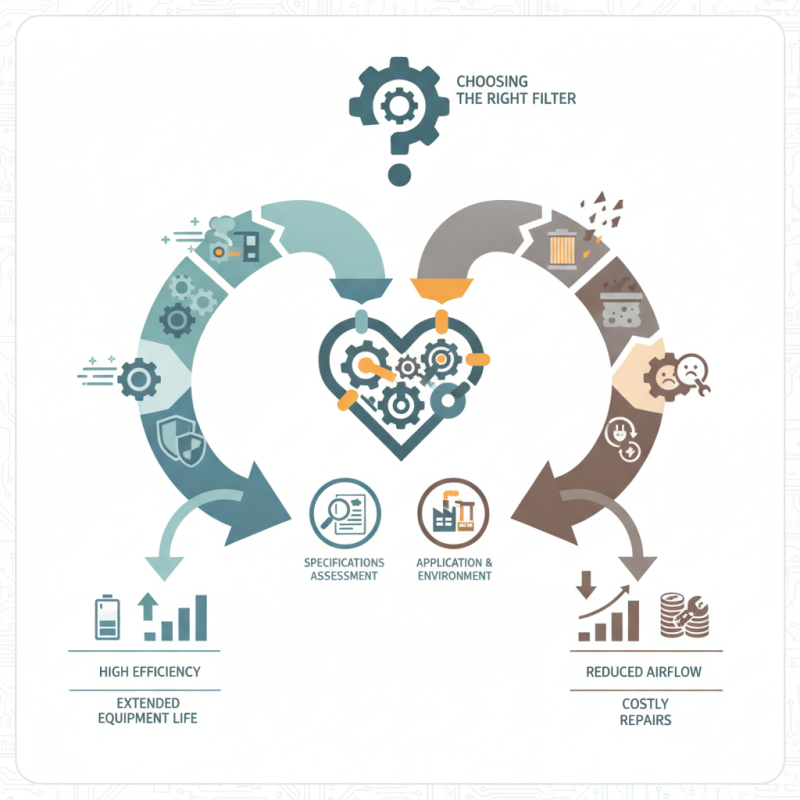
Choosing the right Compressor Filter is crucial for effective operation. As industry expert John Smith states, “The filter is the heart of the compressor system.” Without the right filter, performance can suffer.
Compressor Filters play a vital role in ensuring clean air and efficient operations. They protect machinery from contaminants, which can lead to costly repairs. Incorrect choices may result in reduced airflow or increased energy consumption.
Understanding the filter's specifications is essential. They vary widely based on application and environment. Make sure to assess your specific needs carefully. A well-chosen Compressor Filter can improve reliability and extend equipment life. Consider the potential impact of a poor choice.
When selecting a compressor filter, think about your specific needs. Consider the environment where the compressor operates. Factors like temperature, humidity, and dust levels play a crucial role. A filter suited for a clean room won’t perform well in a dusty workshop. This mismatch can lead to inefficiency and equipment damage, showing that one size does not fit all.
Understanding the type of air contaminants is vital. Is it moisture, oil, or particulate matter? Each contaminant requires a different filtration approach. For instance, if oil mist is a concern, a coalescing filter is essential. However, simply choosing the most advanced filter is not enough. Sometimes, less complex filters can handle the job without the high maintenance costs. Regularly review your filter performance. Sometimes, filters you initially selected can become outdated or less effective.
There can be a tendency to overlook filter maintenance. Skipping regular checks can lead to reduced efficiency. A clogged filter can cause compressor strain. Strain leads to breakdowns and costly repairs. Regular performance reviews and adjustments can save money in the long run. Understand your system and its needs to make informed decisions. It's about finding balance and being proactive rather than reactive.
| Filter Type | Efficiency Rating | Recommended Applications | Replacement Frequency | Estimated Cost ($) |
|---|---|---|---|---|
| Coalescing Filter | 99.9% | Oil and water removal | 300-500 hours | 50-100 |
| Particle Filter | 99.9% | Dust and particulate removal | 500-1000 hours | 30-80 |
| Activated Carbon Filter | Chemical absorption | Odor and vapor removal | 200-400 hours | 40-90 |
| Desiccant Dryer | Moisture removal | Humidity control | 600-1200 hours | 100-200 |
: Filtration efficiency shows how well a filter removes contaminants from the air. Higher efficiency captures smaller particles.
Airflow resistance affects energy consumption. A filter with low airflow resistance helps improve the compressor's overall performance.
Common types include particulate filters and coalescing filters. Each serves different functions for various environments.
Use particulate filters in dusty areas. They capture solid contaminants, protecting your compressor and extending its lifespan.
Coalescing filters remove water vapor and oil aerosols. They are essential in humid environments to protect your equipment.
Regular monitoring is vital. It allows you to change filters based on their condition, preventing unnecessary costs.
While cheaper options seem appealing, they often require frequent replacements. This can increase long-term maintenance costs.
Inadequate filtration may lead to compressor damage or reduced efficiency. Choosing the wrong filter can cause operational issues.
Yes, evaluating your special needs and environment is necessary. Not all filters work well in every situation, so reflection is key.
Quality filters enhance efficiency and reduce energy consumption. They ultimately save on energy bills and improve equipment longevity.
Choosing the right Compressor Filter is vital for ensuring optimal performance and longevity of your compressor system. Understanding your specific needs and the technical specifications of various filters can help you identify the key performance metrics that align with your operational requirements. High-quality filters not only enhance compressor efficiency but also reduce maintenance needs, ultimately extending the lifespan of the equipment.
Different types of Compressor Filters cater to various applications, and selecting the appropriate one can lead to significant cost benefits over time. Investing in quality filters may entail higher initial expenses, but the long-term savings on energy efficiency and maintenance make them worthwhile. By conducting a thorough cost-benefit analysis, you can make informed decisions that support both the functionality and sustainability of your compressor system.

 Jiong Cheng