Choosing the right Air Filtration system can influence employee comfort, customer confidence, and daily operating costs. A busy clinic needs different protection than a warehouse, restaurant, school, or open-plan office. Room size, occupancy, outdoor pollution, humidity, noise, and existing HVAC capacity all matter. A powerful unit may perform poorly if filters are neglected or airflow is blocked by furniture.
Richard Corsi, Ph.D., a respected indoor-air-quality expert, has emphasized, “There is no one-size-fits-all solution.” That principle guides this selection of the 10 Best Air Filtration Systems for Businesses. The list considers practical performance, including HEPA efficiency, MERV ratings, clean air delivery rate, energy use, sound levels, installation needs, and replacement-filter costs. It also considers real workplace conditions, such as dust near loading doors, odors in food-service areas, and crowded meeting rooms.
Specifications can look impressive.
They are not the whole story.
A system with excellent particle removal may still struggle with gases or chemical odors. Another model may be quiet but expensive to maintain. These trade-offs deserve honest attention. No ranking can replace a site assessment by a qualified HVAC or indoor-air-quality professional. Still, this guide offers a reliable starting point for comparing commercial options. It focuses on measurable performance and everyday usability, while acknowledging one uncomfortable truth: even the best equipment cannot compensate for poor maintenance, insufficient ventilation, or unrealistic expectations.
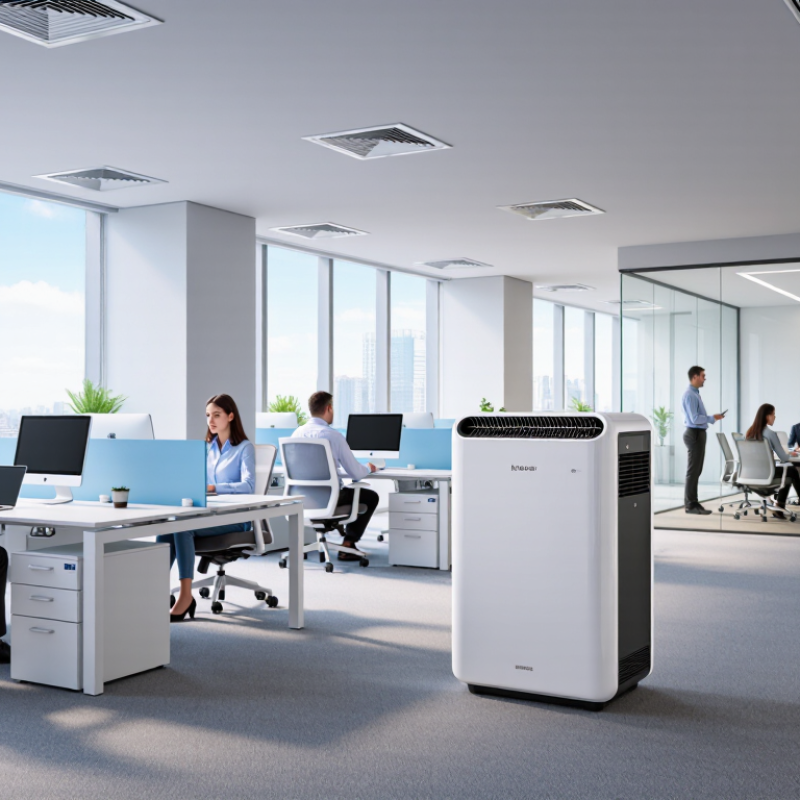
Business air filtration systems clean indoor air through controlled airflow. A fan draws air into the unit, where filters capture unwanted particles. Larger filters remove dust and fibers. Fine-particle filters trap smoke, pollen, and many airborne particles. Some systems also use activated carbon to reduce certain odors and gases.
The system’s performance depends on airflow, filter quality, room size, and operating time. A useful measure is air changes per hour, or ACH. It estimates how often the system can clean the room’s air volume. Sensors may track particles and adjust fan speed. However, sensor readings can vary near doors, vents, or busy work areas. Placement matters more than many buyers expect.
In a small office, steady circulation may improve comfort within hours. In a workshop, the system may need stronger airflow and source control. Filtration cannot replace fresh-air ventilation or safe handling practices. Filters also become less effective as dust builds up. During inspections, I would check pressure readings, airflow direction, filter condition, and maintenance records. Missed replacement dates are common. That weakness deserves attention. A reliable program sets clear service intervals and verifies results after installation. Employee feedback can reveal stale smells, noisy fans, or areas that remain uncomfortable.
10 Best Air Filtration Systems for Businesses?
Key Factors for Evaluating Commercial Air Filtration Systems
Choosing a commercial air filtration system requires more than comparing price tags. Start with particle performance, using tested data such as MERV ratings, HEPA efficiency, or clean air delivery rates. The system should match the room’s size, ceiling height, occupancy, and activities. A busy workshop needs different protection than a quiet office. Measure the space carefully.
Airflow is equally important. Check air changes per hour, pressure drop, and compatibility with existing HVAC equipment. Strong filtration can restrict airflow and increase energy use. That detail is easy to miss. Noise also matters, especially in clinics, classrooms, and customer areas. Ask for independent test reports, not only sales claims. Reliable documentation should identify test methods, operating conditions, and replacement filter requirements.
Maintenance often determines real-world performance. Inspect access panels, filter seals, sensor accuracy, and replacement costs before installation. A filter that is difficult to reach may remain unchanged for too long. That weakens protection. Facilities teams should record pressure readings and service dates, then review indoor air quality trends over time. Portable units may help crowded rooms, but placement matters; walls, furniture, and open doors can reduce circulation. No system is perfect. Regular inspection, correct sizing, and trained staff usually matter more than impressive specifications.
Businesses need different air filtration systems, not one universal solution. A small office may use a portable HEPA unit, while a warehouse may need ceiling-mounted filtration. An HVAC system with a suitable MERV-rated filter supports whole-building coverage. Activated carbon helps reduce certain odors and vapors. Electrostatic collectors can suit some manufacturing spaces. Source-capture systems remove contaminants near equipment. Cleanroom modules support controlled production areas. UV-C units may add microbial control when professionally designed. Kitchen exhaust filtration handles grease and smoke. Medical offices often require layered filtration and careful airflow planning.
During facility reviews, I look at room size, occupancy, humidity, dust sources, and maintenance access. Filter efficiency matters, but pressure drop matters too. A powerful filter can restrict airflow if the fan cannot handle it. That mistake is common. Indoor air sensors can reveal rising particles near printers, loading doors, or crowded meeting rooms. Certified testing and documented replacement schedules improve reliability. Still, readings can vary by season and operating conditions.
Tips: Measure before purchasing. Check the filter’s tested efficiency, airflow rating, noise level, and service cost. Keep spare filters sealed and labeled. Ask a qualified HVAC professional to verify system compatibility. Do not rely only on marketing claims. A low-cost portable unit may work well in one room, yet perform poorly across an open warehouse. Review results after installation, because the first design may need adjustment.
10 Best Air Filtration Systems for Businesses
How to Compare Filtration Performance, Costs, and Maintenance
Choosing among ten commercial air filtration systems requires more than reading efficiency percentages. Compare particle removal at the system’s actual airflow, not only in controlled laboratory conditions. A high-efficiency filter can perform poorly when air bypasses damaged seals. Check test reports, pressure-drop data, and compatibility with your building’s ventilation equipment. In occupied offices, classrooms, and workshops, airflow noise also matters. A system that creates constant humming may encourage staff to switch it off. That defeats the purpose.
Costs extend beyond the purchase price. Estimate electricity use, replacement filters, technician hours, disposal, and possible access equipment. Ask how often filters require changing under dusty or high-traffic conditions. Some systems provide useful pressure sensors, while others depend on visual checks. Small details matter. A blocked filter can increase energy consumption and reduce delivered airflow. Compare clean-air delivery rates where available, but avoid treating one number as a complete answer. Room size, ceiling height, occupancy, and outdoor pollution can change results.
Maintenance access deserves a practical inspection. Can one technician replace the filter without moving desks or shutting down production? Are replacement parts consistently available? Independent commissioning and documented service records improve reliability. I have seen impressive specifications fail because staff could not reach the filter safely. That assumption is often wrong. A realistic comparison includes installation photographs, measured airflow, maintenance logs, and a review after several months of operation.
A business air filtration system works only when installation matches the building’s real conditions. The U.S. Environmental Protection Agency reports that indoor pollutant levels are often two to five times higher than outdoor levels, and sometimes exceed them by 100 times. Source: EPA, “The Inside Story: A Guide to Indoor Air Quality.” Facility teams should map occupancy, outdoor-air supply, dust sources, and employee complaints before choosing equipment. A reception area needs different airflow planning than a workshop.
Select filters according to fan capacity, pressure limits, and maintenance resources. ASHRAE guidance supports MERV 13 or higher when the HVAC system can handle the added resistance. A qualified technician should verify airflow, pressure drop, filter seals, and bypass gaps after installation. Portable units need open inlets and outlets, with placement near occupied zones. The CDC recommends schools target at least five equivalent clean-air changes per hour; businesses should adapt this benchmark to occupancy, room size, and risk. More is not automatically better.
Maintenance is where many plans quietly fail. Record filter changes, pressure readings, noise levels, and recurring complaints. Use calibrated carbon dioxide sensors as ventilation indicators, not as complete air-quality monitors. ASHRAE Standard 241, published in 2023, formalizes equivalent clean airflow for infection-risk management. Do not promise sterile air. That claim is too strong. Even a well-designed system can miss a crowded meeting or blocked return grille. Regular review exposes those weaknesses before they become routine.
Measure room size, ceiling height, occupancy, and indoor activities. A dusty workshop needs different filtration than a quiet office. Measure twice.
Review tested particle-removal data at the system’s actual airflow. Check efficiency ratings, clean-air delivery, pressure drop, and filter-seal performance. One percentage is not enough.
Strong filters can restrict airflow and increase energy use. Damaged seals may let air bypass the filter. This can weaken real protection.
Keep air inlets and outlets clear. Place the unit near occupied areas, away from walls, furniture, and open doors. Placement is easy to underestimate.
Include equipment, electricity, replacement filters, technician time, disposal, and access equipment. A low purchase price may hide expensive maintenance.
Record filter changes, pressure readings, service dates, noise levels, and recurring complaints. Review indoor air quality trends over several months. Records reveal patterns.
Check operating noise before installation, especially in classrooms, clinics, offices, and customer areas. Constant humming may cause staff to switch the unit off.
A qualified technician should verify airflow, pressure drop, filter seals, and bypass gaps. Staff should inspect filters safely and regularly. The plan may still fail.
No. Carbon dioxide can indicate ventilation conditions, but it does not measure every indoor pollutant. Use calibrated sensors carefully.
Not automatically. Room layout, occupancy, outdoor pollution, noise, and maintenance change results. More airflow can also increase energy use.
Choosing the right Air Filtration system is essential for businesses that want to maintain healthier, cleaner, and more comfortable indoor environments. This article explains what commercial air filtration systems are, how they capture or reduce airborne particles, and which factors matter most when evaluating them, including filtration efficiency, airflow capacity, noise levels, energy use, space requirements, and operating costs. It also presents ten types of systems suited to different business needs, from compact solutions for small offices to higher-capacity options for large facilities and specialized work areas.
The guide further explains how to compare performance, purchase prices, maintenance requirements, filter replacement schedules, and long-term value. It concludes with practical advice on installation, airflow planning, routine inspections, system monitoring, and staff management. By considering both immediate indoor air quality goals and ongoing maintenance responsibilities, businesses can select a reliable filtration strategy that supports healthier workspaces while controlling costs and improving operational efficiency.

Jiong Cheng