In 2026, global buyers will evaluate Compressor Parts beyond price and catalog availability. Reliability, compatibility, and documented quality will shape purchasing decisions. Critical items include valves, piston rings, bearings, gaskets, seals, filters, oil separators, and electronic control modules. Each part affects efficiency, pressure stability, maintenance intervals, or operating safety.
Small differences matter.
A worn seal can increase oil consumption within weeks. An incorrect valve plate may create heat, vibration, and costly downtime. Experienced buyers will check material grades, dimensional drawings, pressure ratings, temperature limits, and equipment compatibility before ordering. They will also request inspection reports, batch traceability, warranty terms, and realistic delivery schedules. These details help separate dependable suppliers from attractive but risky offers.
However, no universal list defines the “top” parts for every market. A refrigeration contractor may prioritize expansion valves and filter-driers. A factory using reciprocating compressors may focus on crankshafts, bearings, and piston assemblies. Regional service conditions also change priorities. Dust, humidity, unstable power, and limited technical support can expose weaknesses that laboratory tests miss. This article examines the most important Compressor Parts for global buyers in 2026, using practical maintenance experience, engineering considerations, and supplier evaluation methods. Some market predictions remain uncertain. Buyer data is often incomplete. That limitation deserves honest attention, not confident assumptions.
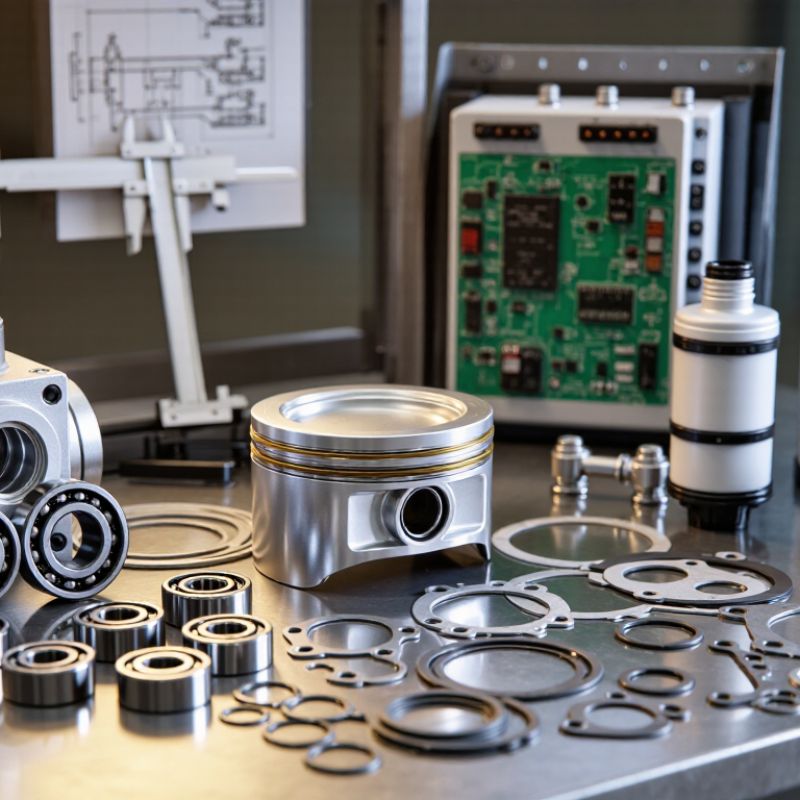
Compressor parts market trends in 2026 are shaped by energy efficiency, uptime, and supply reliability. Global buyers increasingly prioritize valve plates, piston rings, bearings, seals, oil separators, and air filters. These parts directly affect pressure stability, leakage, vibration, and power consumption. Small defects can create expensive shutdowns.
Demand is also moving toward sensor-ready components. Temperature and pressure monitoring help maintenance teams detect wear before failure. Buyers now request material certificates, dimensional reports, batch traceability, and performance test records. Compatibility remains critical. A seal may fit perfectly but fail under different oil, temperature, or refrigerant conditions.
Lead time has become a purchasing factor. Regional warehouses and clearly documented replacement parts can reduce emergency freight. However, faster delivery does not always mean better value. Price still matters. Perhaps more than engineers admit. A low-cost bearing may pass an initial inspection yet produce noise after several weeks. Buyers should compare service life, tolerances, warranty terms, and technical support.
Sustainability is influencing part selection as well. Longer-lasting components reduce waste and maintenance visits. Reusable packaging and efficient machining are gaining attention, although supplier claims need verification. In practice, some purchasing teams still overlook installation quality. Even a reliable seal can fail when technicians ignore torque settings, surface cleanliness, or alignment. Human error remains part of the market equation.
What Are the 2026 Top Compressor Parts for Global Buyers?
Essential Compressor Parts and Their Core Functions
For global buyers, compressor parts should be judged by function, compatibility, and service conditions. The air filter protects the intake system from dust. The oil filter removes particles before they damage bearings and rotors. In oil-injected compressors, the separator removes oil mist from compressed air. Its condition directly affects oil carryover, pressure loss, and operating cost.
Valves also deserve close attention. An inlet valve controls air demand, while an unloader reduces starting load. A check valve prevents reverse flow. Seals, O-rings, and bearings limit leakage and friction. Sensors monitor pressure, temperature, and oil level. The International Energy Agency’s Energy Efficiency 2024 report identifies industry as using about 37% of global final energy. U.S. Department of Energy guidance also indicates compressed-air leaks can waste 20–30% of compressor output. Small components can create large losses.
Tips: Match every part with the compressor model, lubricant, pressure, and ambient temperature. Check ISO 8573-1 requirements when air purity matters. Replace filters by pressure drop, not appearance alone. A clean-looking filter may already restrict airflow. This is easy to miss. Keep spare seals, drains, and sensors in stock, but review failure records before buying large quantities. Supplier documents can be incomplete, and field conditions rarely match laboratory assumptions.
What Are the 2026 Top Compressor Parts for Global Buyers?
Top Compressor Parts for Different Industrial Applications
Compressor parts should match the working environment, not only the machine model. In manufacturing plants, inlet air filters protect cylinders, valves, and control systems from dust. Oil separators help maintain clean compressed air for packaging lines. Strong seals and bearings support long operating cycles. They also reduce unexpected shutdowns. Food processing and pharmaceutical facilities need finer filtration, hygienic separators, and corrosion-resistant fittings. A small leak can affect pressure stability and product quality. Cold-storage systems require reliable valves, sensors, and heat exchangers. These parts must perform under repeated temperature changes. Construction equipment needs durable hoses, couplings, and intake filters. Dust is often the real enemy.
Tips: Check pressure, temperature, lubricant type, and connection size before ordering. Ask for material details and inspection records. Keep a sample part nearby. It prevents costly mistakes.
Energy and chemical applications demand careful selection. High-temperature seals, reinforced gaskets, and accurate pressure sensors are common priorities. Buyers should also verify compatibility with the compressor’s duty cycle. A part that fits physically may still fail under continuous load. Traceable manufacturing records improve purchasing confidence across international markets. Local service access matters too. Delays can turn a minor seal failure into lost production. In my experience, the cheapest component is not always economical. I have also seen over-specified parts waste budget without improving performance. Better decisions come from operating data, maintenance history, and honest review of failure patterns.
Typical replacement intervals for widely used compressor parts across manufacturing, energy, food processing, chemical processing, and construction applications. Actual service life depends on compressor type, operating hours, air quality, load, temperature, and maintenance conditions.
Air filters and oil filters generally require the most frequent replacement, while bearings and seal kits typically remain in service longer when lubrication, alignment, and contamination control are properly maintained.
Global compressor buyers in 2026 need more than attractive prices. They need parts that fit, perform, and remain traceable across borders.
Quality evaluation starts with material evidence. Ask for alloy certificates, heat-treatment records, dimensional reports, and pressure-test results. Compare measured dimensions with the original drawing, not only the catalog image. A cylinder valve may look correct while its lift, seat angle, or spring rate differs. Small differences can increase leakage and energy use.
Compatibility requires a complete operating picture. Record refrigerant type, working pressure, temperature range, shaft dimensions, electrical ratings, and lubrication method. Check thread standards and sealing materials carefully. Metric and imperial threads can appear nearly identical. They are not interchangeable.
For rotating parts, verify balance grade and shaft runout with documented measurements. For electronic controls, confirm signal type, voltage tolerance, and communication protocol. I have seen buyers approve a substitute after checking only external dimensions. That shortcut creates avoidable failures.
Reliable suppliers should provide batch numbers, inspection images, and replacement procedures. Independent testing adds confidence when the application is critical. Still, paperwork is not proof by itself.
Request a sample and test it under realistic load, including startup cycles. Review warranty terms, storage limits, and technical response times before ordering. One practical weakness remains: field data is often incomplete. Document every failure, even the embarrassing ones. Those records improve future compatibility decisions more than confident assumptions.
Global buyers are prioritizing air ends, valves, bearings, seals, filters, and oil separators in 2026. These parts affect pressure stability, energy use, and maintenance intervals. The U.S. Department of Energy reports that compressed air may consume 10–15% of industrial electricity. Its technical guidance also notes that leaks can waste 20–30% of compressor output. A cheap replacement can become expensive after installation.
Cost is only one purchasing factor. Buyers should compare total cost, including freight, downtime, installation, and expected service life. Supply reliability matters more when a critical seal or valve crosses several borders. Check production capacity, safety stock, lead times, and alternate materials. Some suppliers promise short delivery, but their documentation remains weak. That is a real risk. ISO 1217 supports performance testing, while ISO 8573-1 defines compressed-air purity classes. Electrical components should also match applicable IEC requirements. Ask for test records, material certificates, and traceable batch numbers.
Tips: Build a part-level risk list before ordering. Keep emergency stock for high-failure items. Confirm thread sizes, pressure ratings, elastomer compatibility, and operating temperature. Request samples for demanding applications. The ISO 11011 energy-efficiency framework can support system audits, but component data still needs verification. Service quality also counts. A practical supplier should provide drawings, troubleshooting guidance, and response times in writing. I would not select the lowest quote without reviewing these details.
Common priorities include valve plates, piston rings, bearings, seals, oil separators, and air filters. These parts influence pressure, leakage, vibration, and energy use. Small defects matter.
Match each part to pressure, temperature, lubricant, dust, and operating cycles. Manufacturing plants often need strong filters, bearings, and seals. Cold-storage systems require temperature-resistant valves and sensors. Construction equipment needs durable hoses and intake filters.
A seal can fit correctly but fail with unsuitable oil, refrigerant, or temperature. Check elastomer material, connection size, pressure rating, and operating range. Fit is not enough.
Request material certificates, dimensional reports, batch numbers, and performance test records. Drawings and inspection results help confirm consistency. Documentation can still be incomplete.
Compare service life, tolerance, warranty terms, freight, installation, and downtime. A cheap bearing may become noisy after several weeks. The lowest quote may cost more later.
Check production capacity, safety stock, lead times, and alternative materials. Regional warehouses can reduce emergency freight and production delays. Fast delivery is not always better value.
Temperature and pressure sensors can reveal wear before a sudden failure. Maintenance teams can track unusual heat, vibration, or pressure changes. Data helps, but people must interpret it carefully.
Incorrect torque, dirty surfaces, poor alignment, and rushed assembly can damage seals and bearings. Technicians should follow measured procedures and inspect contact surfaces. Human error remains possible. I would review failures honestly.
In 2026, global buyers are placing greater emphasis on efficient, reliable, and easily serviceable Compressor Parts. Market priorities include energy savings, longer operating life, improved equipment compatibility, and stable supply. Essential components such as air ends, valves, filters, separators, bearings, seals, gaskets, and control elements each support critical functions, from compression and airflow regulation to lubrication, filtration, and system protection. Selecting the right part requires more than comparing prices; buyers should assess material quality, dimensional accuracy, pressure and temperature ratings, service life, and compatibility with the compressor model and working environment.
Different industries may require specialized parts for continuous production, harsh conditions, oil-free operation, or high-pressure performance. Global purchasing decisions also depend on total cost, delivery reliability, inventory availability, technical support, warranty terms, and compliance with applicable safety and quality standards. By balancing performance, compatibility, certification, and after-sales service, buyers can reduce downtime, control maintenance expenses, and build a more dependable compressor system.

Jiong Cheng